| 24.03.2010 |
| |
| The following is an excerpt from the Bank of Israel Annual Report which will be published in April: |
| Deviations from Estimated Cost and Completion Dates in Transport Projects |
|
| |
|
|
| |
| |
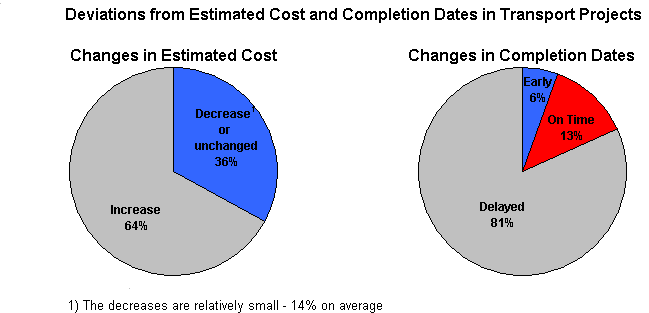
In 64 percent of transport infrastructure projects in Israel, the actual cost of the project turns out to be in excess of the original cost estimate, and in 82 percent of the projects the completion date is later than the original assessment. |
 |
| |
The final cost is, on average, 31 percent higher in real terms, than the original budget, and the time to completion is on average 64 percent longer than estimated. |
|
| |
For large projects (costing more than NIS 100 million), the final cost exceeds the estimate by an average of 45 percent, in real terms. |
|
| Israel's government recently authorized a long-term comprehensive program to update the transport infrastructure, with an investment of tens of billions of shekel in roads and the railway over the next decade. Given the size of the investment and the number of years when it will affect the budget, it is important to examine to what extent the targets are adhered to and the assessed budgets are realized. In order to estimate the risks to the budgetary framework for the next few years deriving from the program, we examined whether transport projects in Israel end up with significantly higher costs than planned, and whether the time to completion exceeds the expectation. |
|
| We examined 196 transport infrastructure projects in Israel (some completed, and others still in progress), and found that in the majority (64 percent) of the projects the actual cost significantly exceeded the budgeted amount. The average project (average of all those examined) costs 31 percent more, in real terms, than the original budgeted cost. In addition, 82 percent of the projects are completed later than the originally estimated completion date. The average project takes 64 percent more time to complete than estimated. Given that some of the projects have not yet been completed, the figures quoted are underestimates. |
|
|
| |
|
|
| |
| Of the 196 projects examined, 110 were large projects (costing more than NIS 100 million). The final cost of these projects deviates from the original budget by more than the average, deviating from the original estimate by 45 percent in real terms. An example of such a project is the express rail link to Jerusalem, the largest project in the sample. It first appeared in the budget for 2004 at a total cost of NIS 4 billion, with completion expected in the fourth quarter of 2008 (all prices have been converted to December 2009 prices). In the 2009 budget the cost had risen to NIS 6.7 billion, and the expected completion date had been pushed back to the first quarter of 2016. The cost has thus ballooned by 69 percent in five years, and the project is still very far from completion. |
|
| |
|