To view this message as a file, click here.
This year’s annual conference marked a decade of the Financial Availability Covenant, a voluntary initiative designed to help survivors of violence and women in the process of leaving prostitution rebuild their financial lives.
The event focused on the covenant’s development over the past ten years—from the initial recognition of the need, to the creation of a practical support mechanism now used by all shelters for survivors of violence, more than 170 domestic violence centers, and organizations assisting survivors of prostitution, with support from the banking system and the Postal Bank.
Launched in 2016, the Financial Availability Covenant is a voluntary framework initiated by the Banking Supervision Department. Its partners include the Association of Banks in Israel, commercial banks, credit card companies, the Postal Bank, social organizations, and the Enforcement and Collection Authority.
Under the covenant, survivors of violence are offered financial solutions tailored to their specific needs, with the goal of helping them recover from crisis, regain stability, and move toward a new life of economic independence. Today, assistance is available to women staying in shelters and transitional apartments, women receiving support at domestic violence prevention and treatment centers across the country, undocumented women who are survivors of violence, and women in the process of exiting prostitution.
Since its launch, the covenant has helped around 5,000 women deal with economic abuse in a wide range of areas, including opening new bank accounts, arranging debt settlements, clarifying liens and garnishments, freezing mortgage payments, requesting removal from joint accounts, removing spouses from accounts, canceling credit cards, and more.
Supervisor of Banks Daniel Hahiashvili said: “The banking and financial system has significant potential to influence the success of rehabilitation processes for women who are survivors of violence. The strength of this covenant lies not only in the individual assistance it provides to survivors of violence or prostitution, but also in the deeper change it has created in culture, public discourse, and the way Israel’s financial system understands its social responsibility. Its impact has crossed sectors and populations and laid the groundwork for a new approach to financial availability for vulnerable groups. A clear example is the Financial Availability Covenant for soldiers, launched recently, which reflects the same deep understanding: that it is our duty as a society—including the banking system—to ensure that soldiers facing financial challenges can begin their adult lives free of burdensome debts and obligations, and with a real opportunity for a fresh start.
“I deeply appreciate this work, in which the banking system and many partner organizations act with sensitivity and professionalism to help survivors pave their way toward financial independence.”
The meeting was opened by Supervisor of Banks Daniel Hahiashvili; Avi Levy, CEO of Discount Bank; Eitan Madmon, CEO of the Association of Banks in Israel; and Mali Orgad, Director of the Trauma and Crisis Treatment Service at the Ministry of Welfare and Social Affairs.
The conference began with a video reviewing the covenant’s development over the past decade, from identifying the need to building the mechanism and implementing this unique voluntary banking tool. The video highlighted the support currently provided to women in shelters and domestic violence centers, and survivors of prostitution, while also recognizing the many partners and professionals involved in carrying out this important social mission.
Among the speakers:
- Miri Benshalom-Dor, former manager of the shelter operated by the Isha L’Isha association, spoke with Odeda Perez, Deputy Supervisor of Banks, and with the first woman who received support under the covenant, about the landmark case that led to the initiative.
- Yafit Alfandari, Senior Director of Gender and Social Economics at the Central Bureau of Statistics, presented data on women’s financial literacy and discussed its importance for women’s empowerment and the prevention of economic abuse.
- Attorney Hadas Arnon-Sharabi, Director of Policy and Legislation Promotion at the Ruach Nashit association, shared insights on the challenges of implementing the covenant and on the not-always-simple meeting point between banking language and therapeutic language.
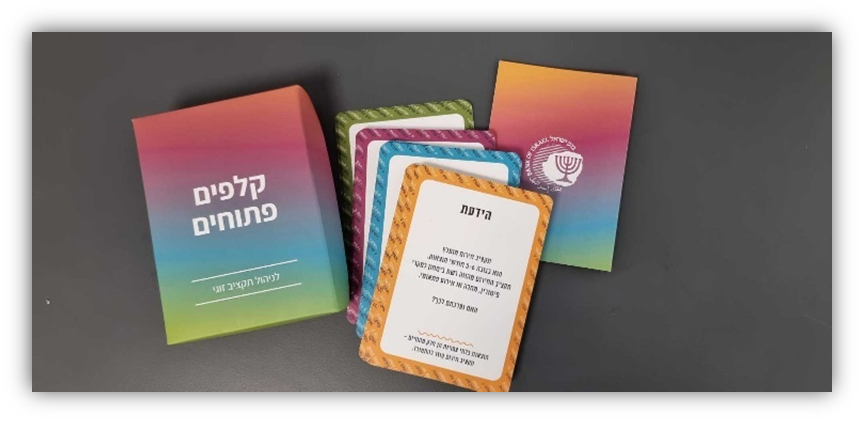
The conference concluded with the launch of a card game developed by the Banking Supervision Department for young couples at the beginning of their shared lives. The game is intended to raise awareness about managing a household budget, encourage open conversations about finances, and promote healthy financial habits as part of broader efforts to prevent economic abuse.
For more information on the Financial Availability Covenant from the Bank of Israel website, click here.