| 28.3.2007 |
| |
The Bank of Israel publishes an excerpt from its 2006 Annual Report,
due to be published 11 April 2007
This excerpt, from the section "Issues in Welfare Policy,"
deals with the subject of poverty in Israel
|
|
| |
 |
Poverty among individuals, as measured by the relative index customarily used in Israel, rose in 2005 to 24.7 percent. Some reduction in poverty was evident in 2006, however, and in the year to June 2006 it reached 24.4 percent. |
| |
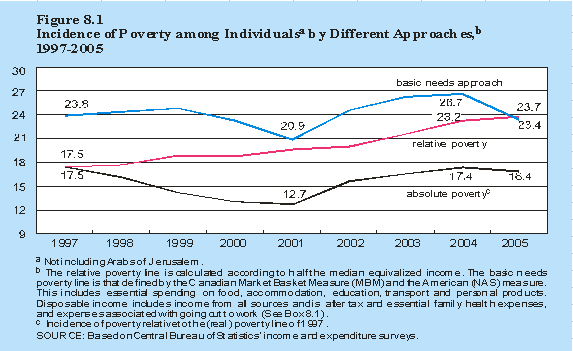
Alternative poverty indices, which reflect the ability to purchase a basket of essential goods or a fixed basket, show a fall in poverty in 2005, after rising for the three preceding years. |
| |
Forty percent of the poor manage to consume more than the amount indicated by the poverty line. However the high incidence of poverty over the years makes it difficult for the weaker sections of the population to maintain a reasonable standard of living, so that the level of consumption of sixty percent of the poor, as well as their income level, is below the poverty line. |
| |
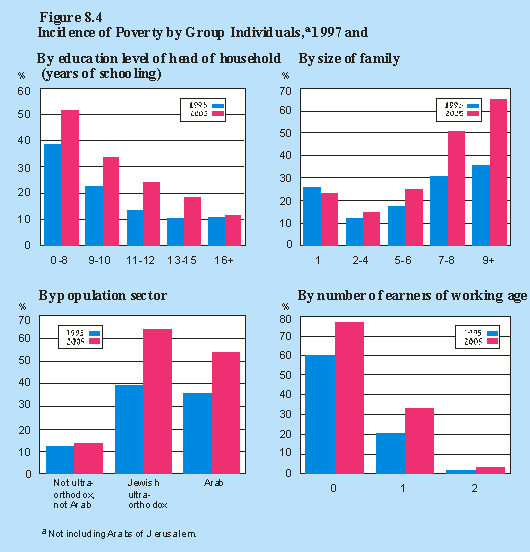
The incidence of poverty is particularly high among Arabs, and especially among the Bedouin (66.4 percent poverty) and the ultra-orthodox (Haredim). The Arab and ultra-orthodox populations constitute 60 percent of all the poor, a rate that has grown significantly over the years. |
| Poverty in Israel has reached a high level in recent years, high also in international terms. In 2005 poverty among individuals, using the system that measures poverty in relative terms, continued to rise, and reached 24.7 percent (including Arabs of East Jerusalem). However, after a continued rise in recent years, poverty registered a slight reduction, and in the year to mid-2006, it reached 24.4 percent. According to indices that reflect the ability to buy a basket of essential goods or a fixed basket of such items, poverty fell in 2005, after rising in the three preceding years (Figure 1, not including Arabs of East Jerusalem). The fall in poverty according to these alternative measures reflects the improved economic conditions for some of the weaker population following GDP growth. |
| Forty percent of the poor manage to consume more than the amount indicated by the poverty line, apparently through the use of credit or savings. However the high incidence of poverty over the years makes it difficult for the weaker sections of the population to maintain a reasonable standard of living, so that the level of consumption of 60 percent of the poor, as well as their income level, is below the poverty line. Child poverty, as measured by the relative indices, rose by 2 percentage points in 2005 to an unprecedented 35.2 percent, which is high also by international comparison. The high rate of child poverty not only harms the children's current standard of living, but also adversely affects the creation of human capital, which is important for future earning power. |
| Poverty in Israel is particularly high among the Arab sector, specifically the Bedouin (at 66.4 percent), and among the ultra-orthodox Jewish population, mainly as a result of their low participation rates in the labor market. The Arab and ultra-orthodox groups account for some 60 percent of all the poor. Viewing poverty over the years shows that the poverty indices worsened particularly among those groups that already suffered high levels of poverty, and particularly the Arab and ultra-orthodox populations (Figure 2). The rise in poverty among these groups accounts for most of the change in the incidence of poverty in general. Poverty among the weaker populations grew mostly due to the comprehensive cutbacks in transfer payments from 2002––as these groups are heavily dependent on welfare payments––and a fall in their participation in the labor market. In some of the weaker groups, however, for example those with low levels of schooling, their participation in the labor market increased slightly at the end of the period. |
|
| |
|
|
| |
|
|
| |
|