To view this message as a word file, click here.
To view this message as a pdf file, click here.
The findings published here are aggregated and pertain to the banking corporations as a whole. They are presented using weighted net balances[1], summarizing the change that occurred in the third quarter of 2026 compared to the previous quarter, or the expected change in the fourth quarter of 2026 compared to the third quarter.
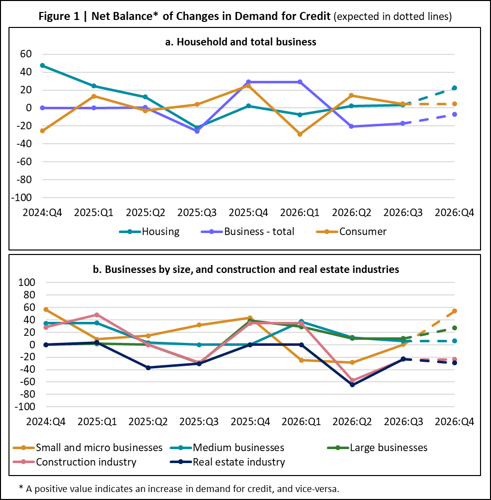
- In the third quarter of the year, the decline in demand for business credit continued, including in the construction and real estate industries, and demand for housing credit and for consumer credit remained unchanged.
- Demand for credit in the construction and real estate industries is expected to decline in the fourth quarter.
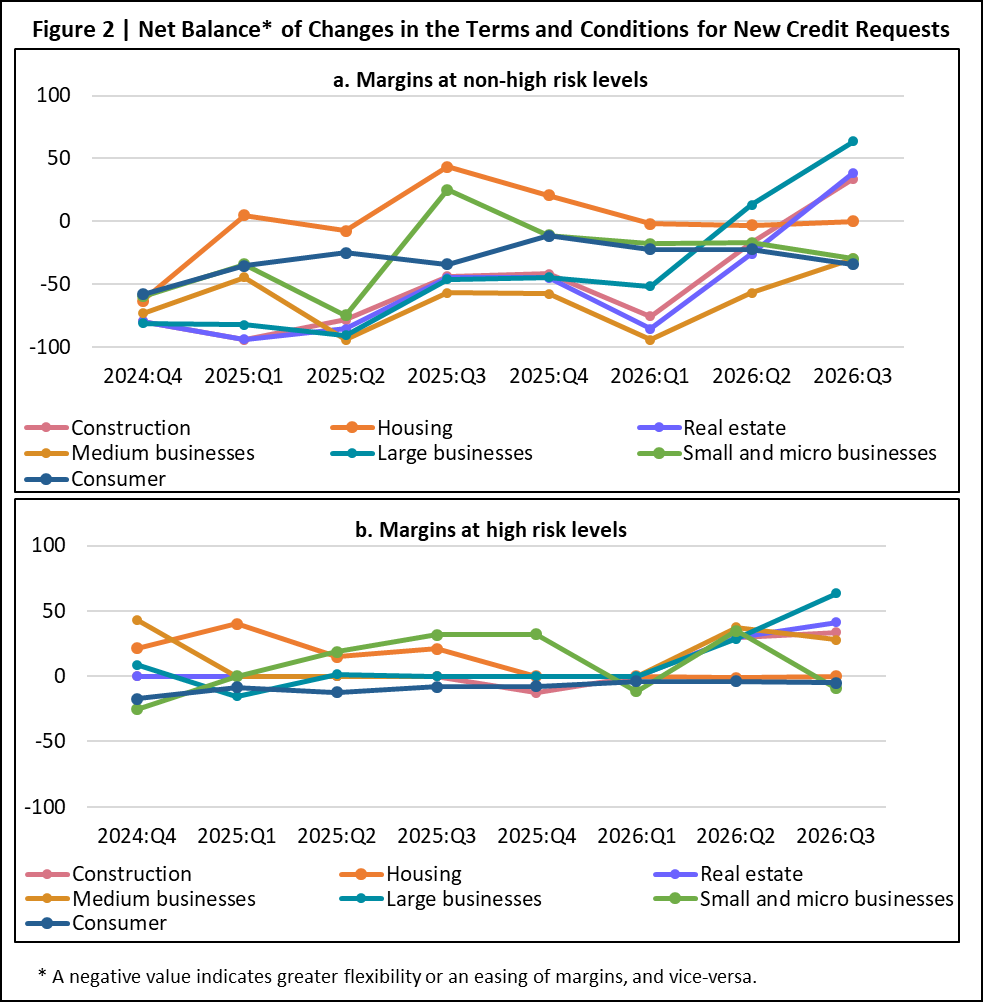
- In the third quarter of the year, the banks reported a tightening of credit margins in the construction and real estate industries and in the large business segment, and an easing of the margins in non-risky credit to small and micro businesses and to medium businesses. In the household sector, the margins in consumer credit continued to ease.
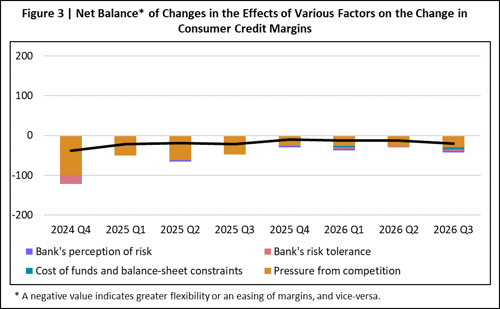
- According to respondents, competition in the credit market is the main factor contributing to the easing of margins in the consumer credit segment.
- Demand for Credit
The decline in demand for total business credit, including in the construction and real estate industries, continued in the third quarter of 2026[2], and the banks expect the decline to continue in the fourth quarter. In the household segment, demand for consumer credit and for housing credit remained unchanged in the third quarter. The banks expect growth in demand for housing credit and stabilization in demand for consumer credit in the next quarter. (Figure 1).
- Credit Supply
The banks reported a tightening of the margins in risky credit in the construction and real estate industries and in the large business segment in the third quarter of the year, and an easing of the margins in nonrisky credit to small and micro businesses and to medium businesses. In the household segment, the easing of margins in nonrisky consumer credit continued and the margins for housing credit remained unchanged. (Figure 2).
According to the banks, the main factors contributing to the easing of credit margins in the third quarter continued to be competitive pressures (Figure 3).
[1] The net balance is calculated as the difference between the percentage of answers on the positive side and the percentage of answers on the negative side. For questions regarding the demand for credit, the answers “increased/increased greatly” were defined on the positive side and the answers “declined/declined greatly” were defined on the negative side, such that a positive net balance reflects an increase in demand for credit, and vice-versa. For questions regarding the supply of credit, meaning the credit provision police and the terms of credit, the answers “Tightened considerably” and “Tightened somewhat” were defined on the positive side, and the answers “Eased somewhat” and “Eased considerably” were defined on the negative side, such that a positive net balance reflects a tightening of credit policy or of the terms of credit, and vice-versa. The answers were weighted in accordance with each bank’s share of the credit segment.
[2] The construction and real estate industries are defined in accordance with the Central Bureau of Statistics Standard Industrial Classification of All Economic Activities (Section F), including mainly Construction of Buildings, Structures, and Infrastructure, while the Real Estate Industry (Section L) includes Real Estate Activities, mainly the purchase, sale, renting, and operation of real estate. It does not include construction development for sale.